Where a planet sits in your chart is worked out to a thousandth of an arcsecond.
Most astrology sites round off, hand-wave, or use a spreadsheet. We use the same astronomical engine NASA mission planners use, fed by the same JPL data professional observatories rely on.
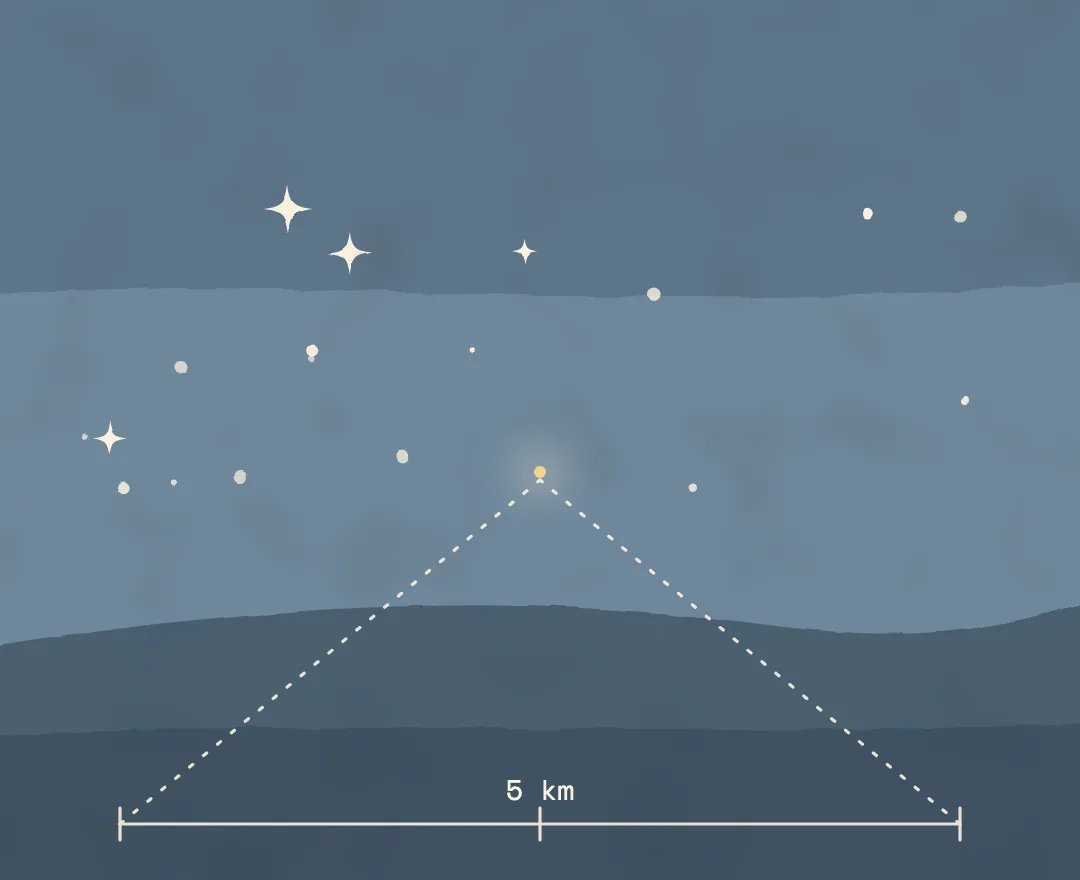
plus or minus 0.001 arcseconds
Typical accuracy
That is about the angular size of a coin held five kilometres away. Computed for every planetary position in every reading.
Three pieces, none of them ours. That is the point.
We did not invent the astronomy. We use the tools the professionals use, and we say which.

Swiss Ephemeris
The gold standard for astronomical calculation. The same engine used by professional astrologers, mission planners, and academic ephemerides. Open-source, peer-reviewed, decades old.
NASA JPL DE441
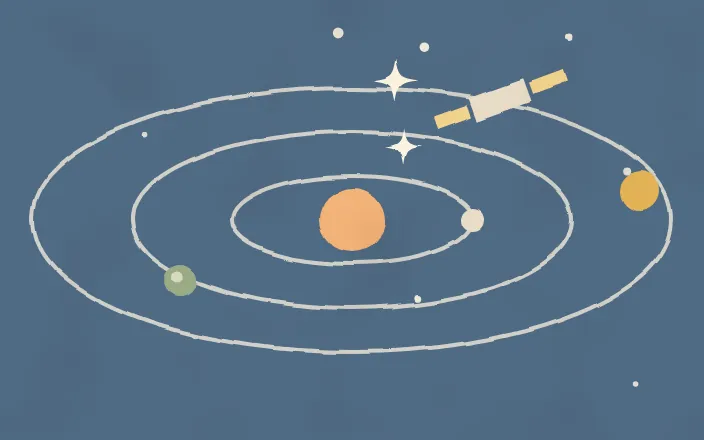
Jet Propulsion Laboratory's planetary ephemeris. The same dataset used to predict where the planets will be a thousand years from now and where they were a thousand years ago. We pull positions from it.
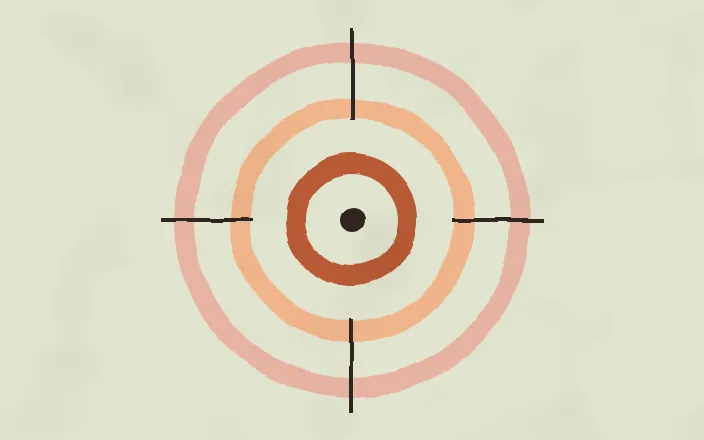
± 0.001 arcseconds
The typical error in a planetary position we compute. To a working astrologer, that is rounding noise. To us, it is the bar.

Want your own chart's precision measured this way?
We'll email your 10% welcome offer and the occasional new guide. No spam, unsubscribe anytime.
A sky split into three million parts.
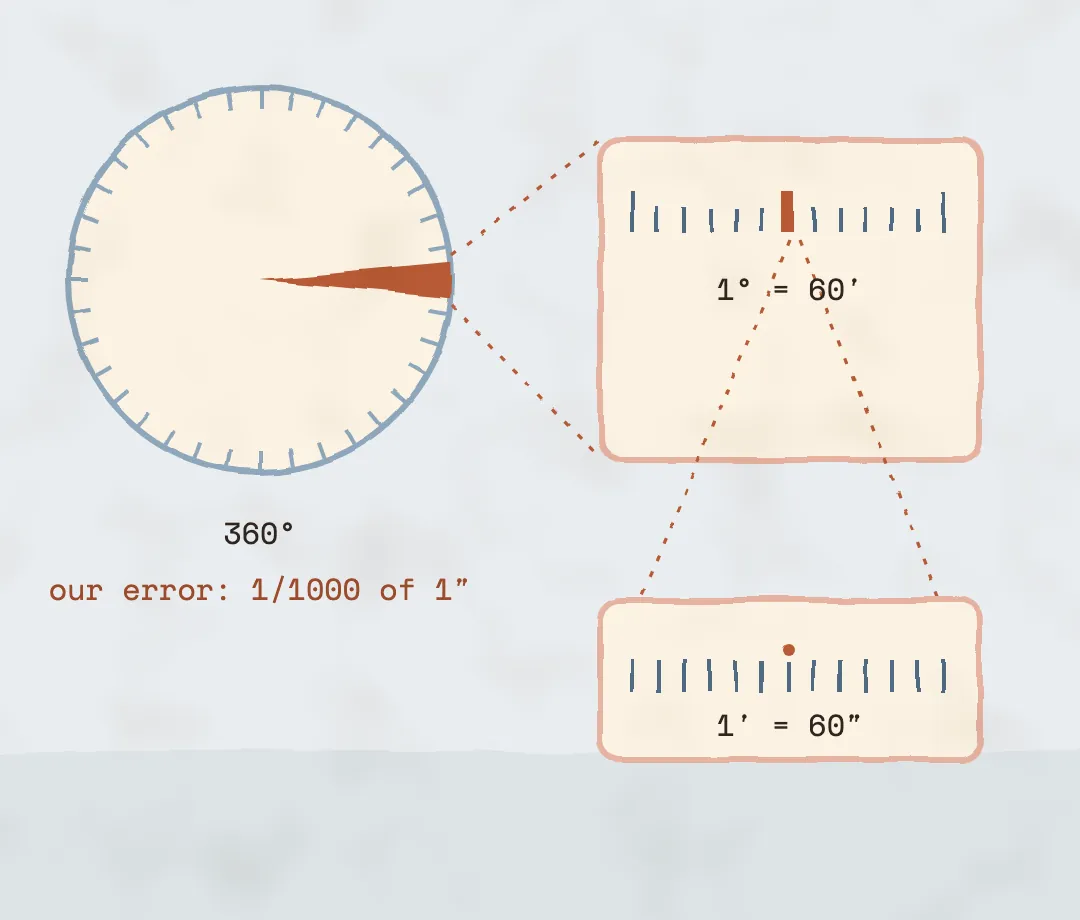
A circle is 360 degrees. Each degree is split into 60 arcminutes. Each arcminute is split into 60 arcseconds. An arcsecond is one three-thousand-six-hundredth of a degree.
Our typical error is one-thousandth of an arcsecond, roughly the angular size of a coin held five kilometres away. Below the threshold of any human observation. Above the threshold of any meaningful astrology.
Three places sloppy math breaks the read.
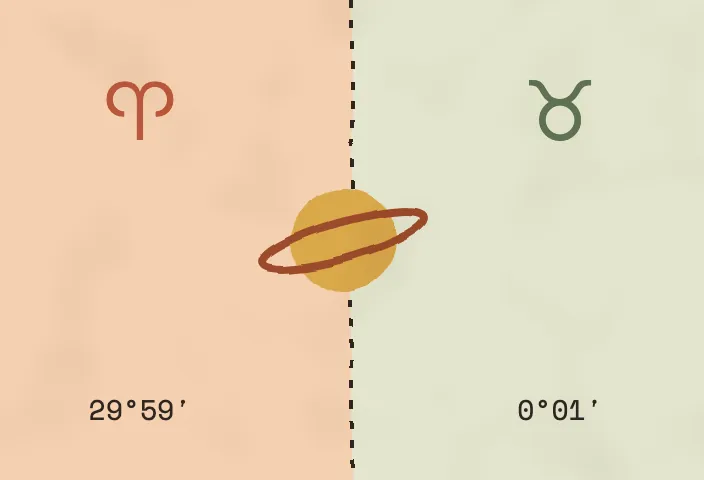
Saturn at 29°59' Aries.
Saturn at 29°59' Aries is a Saturn in Aries reading. Saturn at 0°01' Taurus is a Saturn in Taurus reading. Two completely different interpretations across all three traditions.
Cusp signs require the math be exact, not approximate.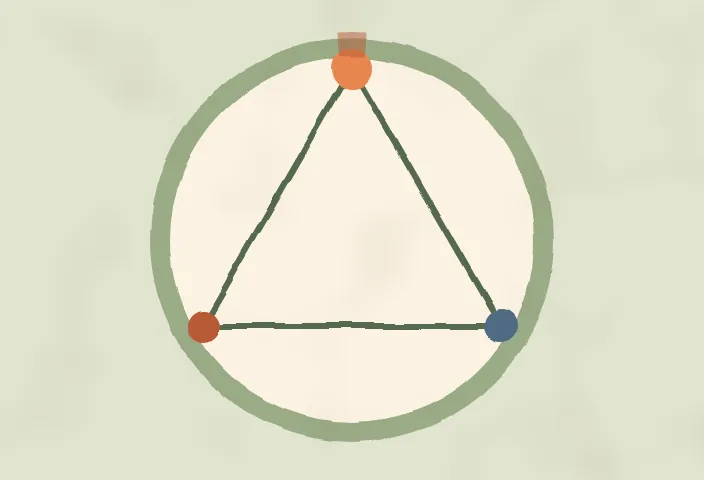
A 1° trine, in orb.
An aspect within 1° of exact carries weight. An aspect 5° wide barely registers. Sloppy math means an applying square gets read as a separating one, which means the energy is mistaken for resolved.
Orb precision is the difference between live and dead aspects.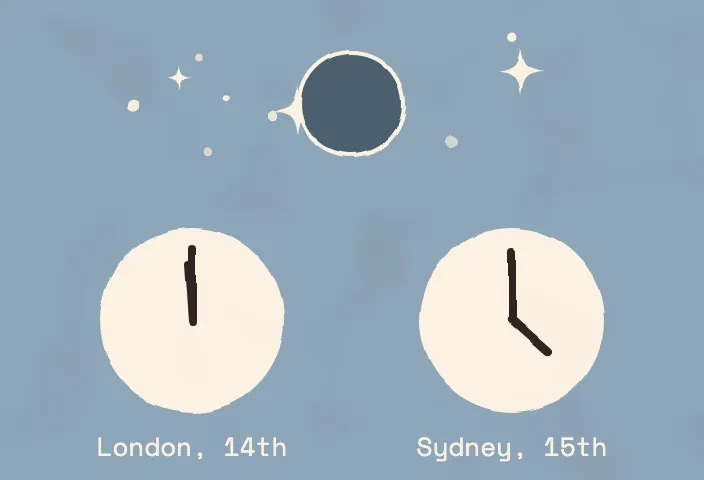
A New Moon at 23:58.
A New Moon at 23:58 UTC on the 14th falls on the 14th in London and the 15th in Sydney. Forecast windows hinge on the exact moment of exact aspect, not the approximate one.
Timezone-correct events need timezone-correct math.From spacecraft data to your inbox, in four steps.
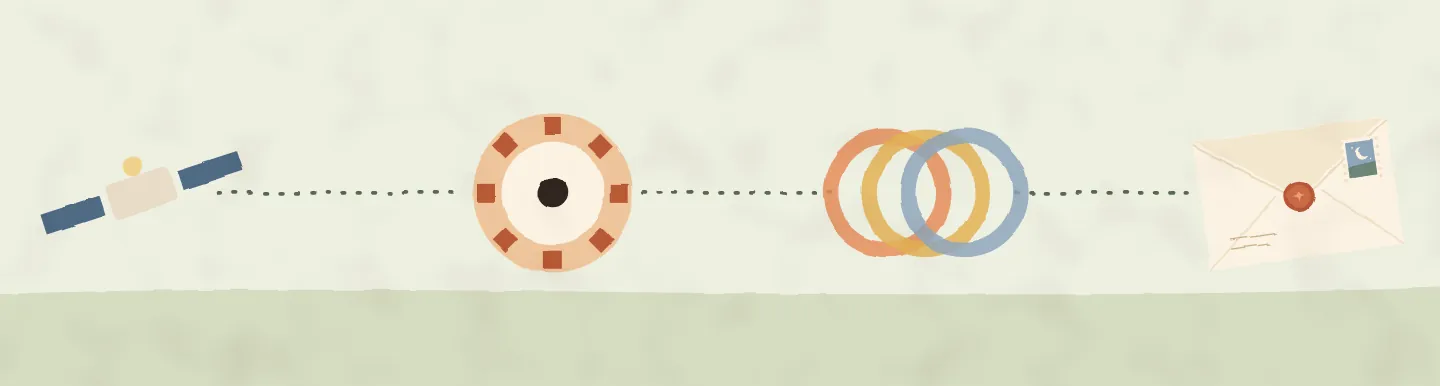
We pull positions from the DE441 ephemeris, the same dataset NASA uses to navigate spacecraft.
Your birth date, time, and place feed into the engine. Out come planetary longitudes, latitudes, and speeds.
The same positions feed three computations: Western tropical, Vedic sidereal, Hellenistic classical.
Convergent and divergent themes are surfaced, then composed into the prose you read.
If precision matters to you, read your chart through the measured engine.
Start with a free reading from your birth date. The written readings go deeper.
Mini US$9 · Full US$39 · same-day delivery
Get 10% off your first reading
We'll email your 10% welcome offer and the occasional new guide. No spam, unsubscribe anytime.
